Cryptocurrency guides
Tronlink ton wallet is a self-custody TRON wallet for TRX, staking resources, and TRC-20 assets
Bottom line: Self-custody TRON wallet for managing TRX and TRC-20 assets, with staking resource delegation and DApp access on mobile or extension.
Tronlink ton wallet is a self-custody wallet built around the TRON network, where users hold private keys locally, transfer TRX, manage TRC-10 and TRC-20 tokens, vote in staking, obtain bandwidth or energy, and connect to DApps through a browser extension or mobile app. Its official positioning centers on TRON first, with the extension also adding EVM network support for Ethereum, BSC, and BTTC.
The phrase points to TronLink, a wallet known for deep TRON support rather than a generic multi-chain account screen. The practical appeal is direct control over TRON activity: sending TRX, holding USDT on TRC-20, interacting with smart contracts, and using network resources without treating every transaction as a simple gas-fee event. That matters because TRON separates account balances from bandwidth and energy, so wallet design affects how clearly a user sees the cost of each action.
TRX, TRC-20 tokens, and TRON resources in one account
At the asset layer, TronLink covers the main TRON token standards. TRX is the network coin used for transfers, staking, resource acquisition, and transaction settlement. TRC-10 assets are native tokens issued on TRON without the same smart-contract structure as TRC-20. TRC-20 tokens, including widely used stablecoins such as USDT on TRON, follow a smart-contract standard and rely on energy when contracts execute.
Tronlink ton wallet also supports TRC-721 NFTs, so the same wallet model handles fungible tokens and collectibles. This combination fits the way TRON users move between payments, stablecoin transfers, staking, and DApp sessions. The account stays under the user's keys, while the interface presents balances, token activity, and network status in a format built for regular on-chain use.
How staking turns TRX into bandwidth, energy, and votes
TRON uses a resource model that makes staking more than a yield button. When TRX is staked, it helps obtain resources such as bandwidth and energy. Bandwidth is tied to ordinary transaction data, while energy is important for smart-contract calls, including many TRC-20 token operations. A wallet that exposes these resources clearly helps users understand why one action consumes free bandwidth while another requires energy or burns TRX.
Voting is another part of the staking workflow. TRON uses Super Representatives in its delegated proof-of-stake structure, and staked TRX gives voting power. TronLink supports voting and resource-related actions from inside the wallet experience, so users do not need to treat staking, transfers, and DApp access as separate worlds. Delegation also matters because resources have value when another account needs energy for contract activity.
Where the extension and mobile app fit
The browser extension is built for DApp sessions. It injects wallet connectivity into the browser, prompts the user for approvals, and signs transactions from the local account. This is the format people expect when using TRON DeFi apps, NFT markets, governance pages, or developer tools that interact with TronWeb. On desktop, it gives a DApp a familiar connection path while keeping signing inside the wallet.
The mobile app is better suited to everyday balances, transfers, account creation, QR-code flows, and on-the-go review. Tronlink ton wallet covers both PC browser extension and mobile use, which is important for users who hold TRX in one place but move between desktop DeFi and phone-based payments. A single mnemonic can manage accounts across supported networks in the HD wallet structure, while each signing action still deserves a deliberate review.

What EVM support adds to a TRON-first wallet
In practice, TronLink Extension supports EVM networks including Ethereum, BSC, and BTTC. That expands the wallet beyond TRON-only activity while preserving its strongest identity as a TRON-focused wallet. EVM compatibility means users see account and network switching patterns that feel familiar from MetaMask-style workflows, but the TRON resource model remains a distinct part of the experience.
BTTC is especially relevant because it sits close to the TRON ecosystem, while Ethereum and BSC broaden access to common Web3 applications. Tronlink ton wallet is therefore most useful when a user wants TRON depth first and some EVM reach second. Someone whose entire routine lives on Ethereum mainnet uses a different mental model; someone moving TRX, TRC-20 USDT, and TRON DApps gets a wallet shaped around those details.
Getting started with a wallet account and backup
A new user starts by installing the official extension or mobile app, creating a wallet, and recording the recovery phrase in the exact order shown during setup. Importing an existing account follows the same custody principle: the key material stays with the user, and the wallet becomes the signing interface. The important first task is not buying a token; it is preserving recovery access before any asset arrives.
After setup, adding assets means selecting the correct network, checking the receiving address format, and making a small test transfer when using a new source. TRON addresses commonly begin with T, and sending assets over the wrong network creates recovery problems. Once funds arrive, the wallet displays balances and transaction history, and the user can move into staking, voting, resource management, or DApp connections.
DApp approvals and multisignature controls
DApp access is one of the main reasons people install TronLink. A DApp asks to connect, the wallet identifies the account, and later prompts request signatures or transactions. The sensitive moment is the approval screen. Token transfers, smart-contract calls, and permission changes have different consequences, so the transaction details matter more than the name of the site requesting access.
Notably, Tronlink ton wallet includes features that fit heavier account management as well. Ledger Live import adds hardware-backed signing for users who want a separate signing device. Multisignature support lets several accounts control one asset set, which suits teams, shared treasuries, and higher-value balances that need more than one approval path. Hot and cold wallet patterns also separate daily interaction from longer-term storage.
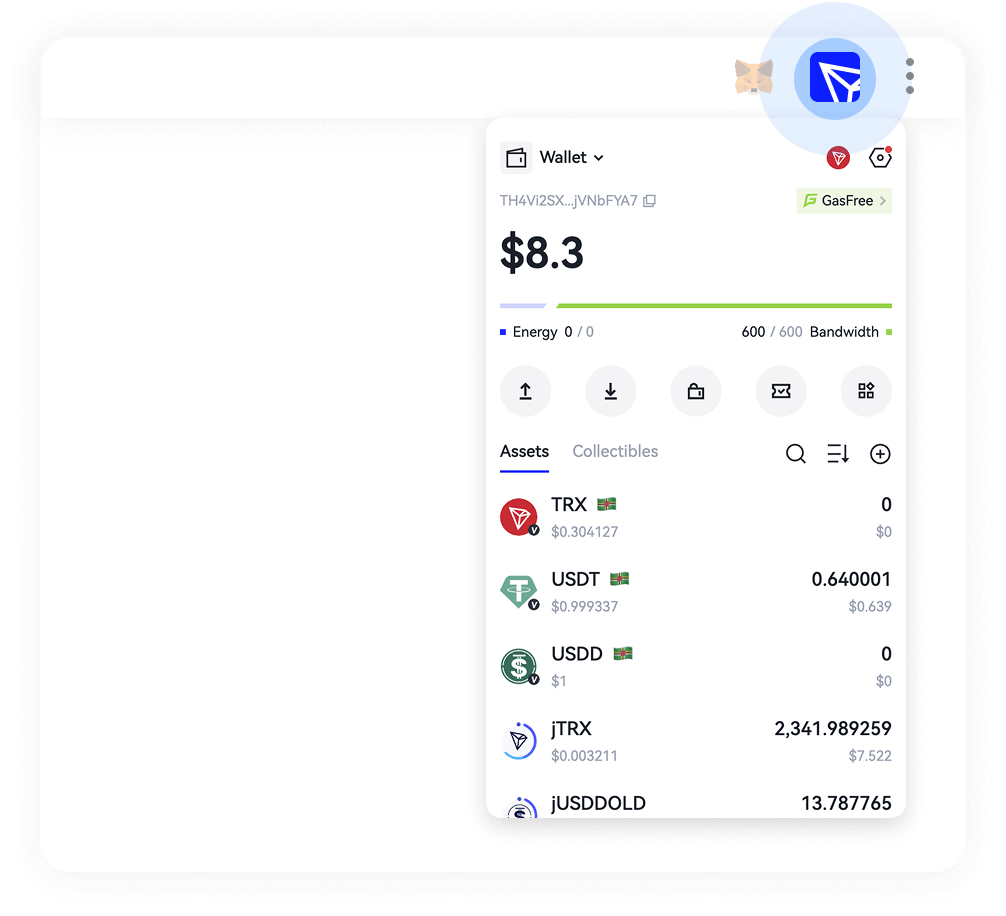
Security model: local keys, encrypted storage, and node choice
The wallet's security model starts with local private-key storage and encryption rather than a custodial login. That design gives users direct signing authority, so recovery phrase handling becomes the central responsibility. Device security, browser hygiene, and approval review all affect the outcome because a self-custody wallet signs what the user authorizes.
Typically, TronLink also emphasizes environment checks, transaction-data protection, node switching, and automatic reconnection. Node choice matters because wallet reliability depends on reaching the network consistently. When a node lags or becomes unavailable, switching nodes helps transactions and balances update normally. Tronlink ton wallet combines those operational features with account-level protections such as encrypted key handling and optional hardware-wallet use.
Fees, resources, and the cost of TRC-20 transfers
TRON fees are easiest to understand through resources. A basic TRX transfer consumes bandwidth. A TRC-20 transfer calls a smart contract and uses energy. If an account lacks enough free or delegated resources, TRX is burned to cover the transaction. That makes staking and resource delegation central to cost management, especially for users who move stablecoins frequently.
Before sending a TRC-20 token, the wallet view should be checked for available TRX and resource status. This is especially important with USDT on TRON because stablecoin users sometimes focus only on the token balance and forget the network coin. Tronlink ton wallet helps surface the TRON-specific mechanics, but the account still needs enough TRX or resources to complete the transfer.
When another wallet is a better match
In most cases, TronLink is the natural choice for TRON-first activity, while other wallets fit different habits. MetaMask remains the default reference point for Ethereum and EVM-native DApp use. Trust Wallet covers a wide mobile-first set of networks and assets. Ledger Live pairs with Ledger hardware devices for users whose main priority is device-based signing across multiple ecosystems.
Choosing between them comes down to the chain where most activity occurs. A user staking TRX, voting for Super Representatives, sending TRC-20 USDT, and using TRON DApps gets the most relevant controls in TronLink. A user focused on Solana, Bitcoin, or Ethereum-only DeFi should match the wallet to that network's tooling, address format, and signing standards.
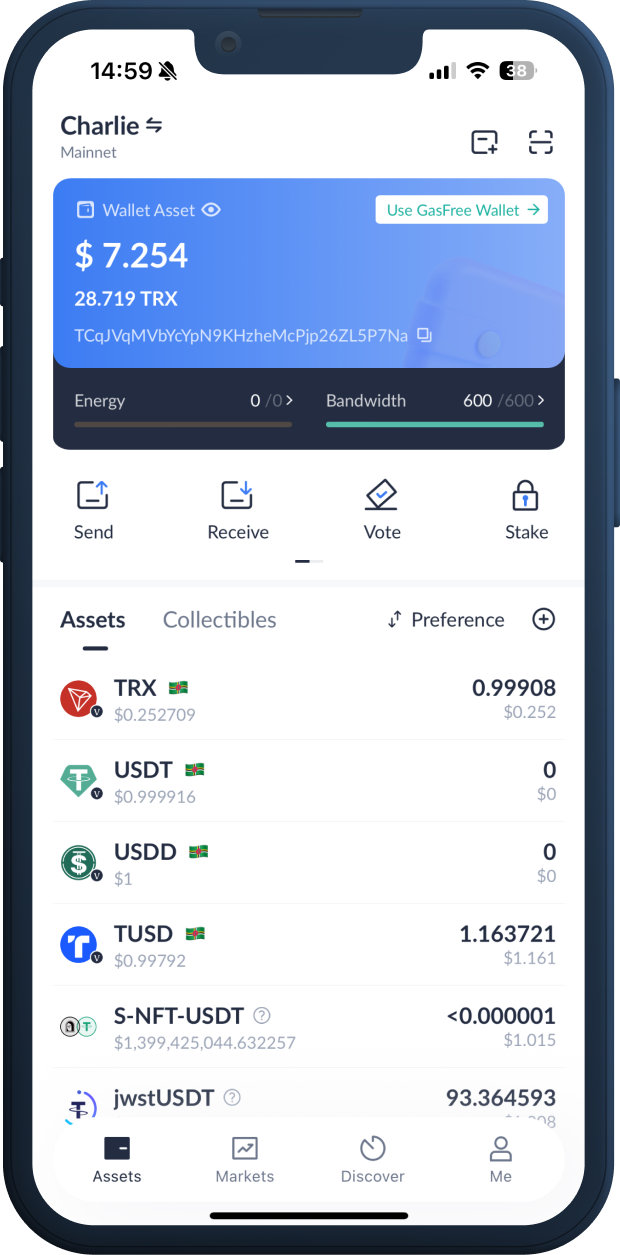
Common workflow: from receiving TRX to using a DApp
A clean first workflow keeps the steps narrow. Create or import the account, secure the recovery phrase, receive a small amount of TRX, confirm the address, and review the transaction record. Then add the token view needed for TRC-20 assets, stake TRX if resource use will be frequent, and connect to a DApp only after confirming the site and network.
- Use TRX for the first test transfer and network activity.
- Keep enough TRX available for resource gaps and contract calls.
- Review DApp requests before signing token approvals.
- Use staking when repeated TRON activity needs bandwidth or energy.
- Consider Ledger or multisignature controls for larger balances.
That sequence turns Tronlink ton wallet from a downloaded extension into a working TRON account. The value comes from matching the wallet's TRON-specific controls with the user's actual behavior: payments, stablecoin movement, staking, resource delegation, NFT holding, or DApp interaction.
Frequently asked questions about Tronlink ton wallet
Does TronLink support TON or Toncoin assets?
TronLink is primarily a TRON wallet, and its official feature set centers on TRX, TRC-10, TRC-20, TRC-721, staking resources, DApps, and selected EVM networks such as Ethereum, BSC, and BTTC through the extension. The search phrase Tronlink ton wallet is best read as a TRON wallet query unless a user specifically means The Open Network and Toncoin.
Fees on Tronlink ton wallet for USDT transfers: what pays the cost?
USDT on TRON is a TRC-20 token, so transfers use smart-contract execution and consume energy. If the account has enough energy through staking or delegation, the transfer uses that resource. If resources are short, TRX is burned to pay the network cost. Keeping a small TRX balance is important even when the main asset being moved is USDT.
Can I import a Ledger Live into TronLink?
Yes. TronLink lists Ledger Live importing among its wallet features, including Bluetooth-based import support. The benefit is that signing can stay tied to the hardware device while the TronLink interface handles TRON account viewing and DApp interaction. This setup is most useful for users who want TRON network access without keeping all signing authority in a browser-only hot wallet.
Which token standards show inside TronLink?
TronLink supports the core TRON token standards: TRX as the native network coin, TRC-10 tokens, TRC-20 smart-contract tokens, and TRC-721 NFTs. That coverage fits common TRON activity such as holding USDT on TRC-20, transferring TRX, viewing collectibles, and interacting with DApps that issue or manage TRON-based assets.
Do I need TRX if I only receive TRC-20 tokens?
Receiving a TRC-20 token does not make TRX irrelevant. To send that token later, interact with a DApp, or cover a resource shortfall, the account needs TRX or delegated resources. Many stuck-transfer situations happen when a wallet shows a token balance but has no TRX available for the transaction path.
What happens if a DApp asks for unlimited token approval?
An unlimited approval gives the approved contract broad permission over that token until the allowance is changed or revoked. This is convenient for repeated DApp use, but it increases exposure if the contract or site is malicious. Review the asset, spender, and permission type before signing, especially for stablecoins and high-value TRC-20 balances.
Is the TronLink mobile app enough for staking TRX?
The mobile app supports normal wallet management and TRON functions, including account creation or import, transfers, and staking-related activity. Desktop extension use becomes more convenient when a user spends time in browser-based DApps. Many users keep both: mobile for routine balance checks and transfers, extension for DApp sessions and more complex on-chain operations.